
Garnet - Submission to the Aurelia Institute Prize in Design for Space Urbanism
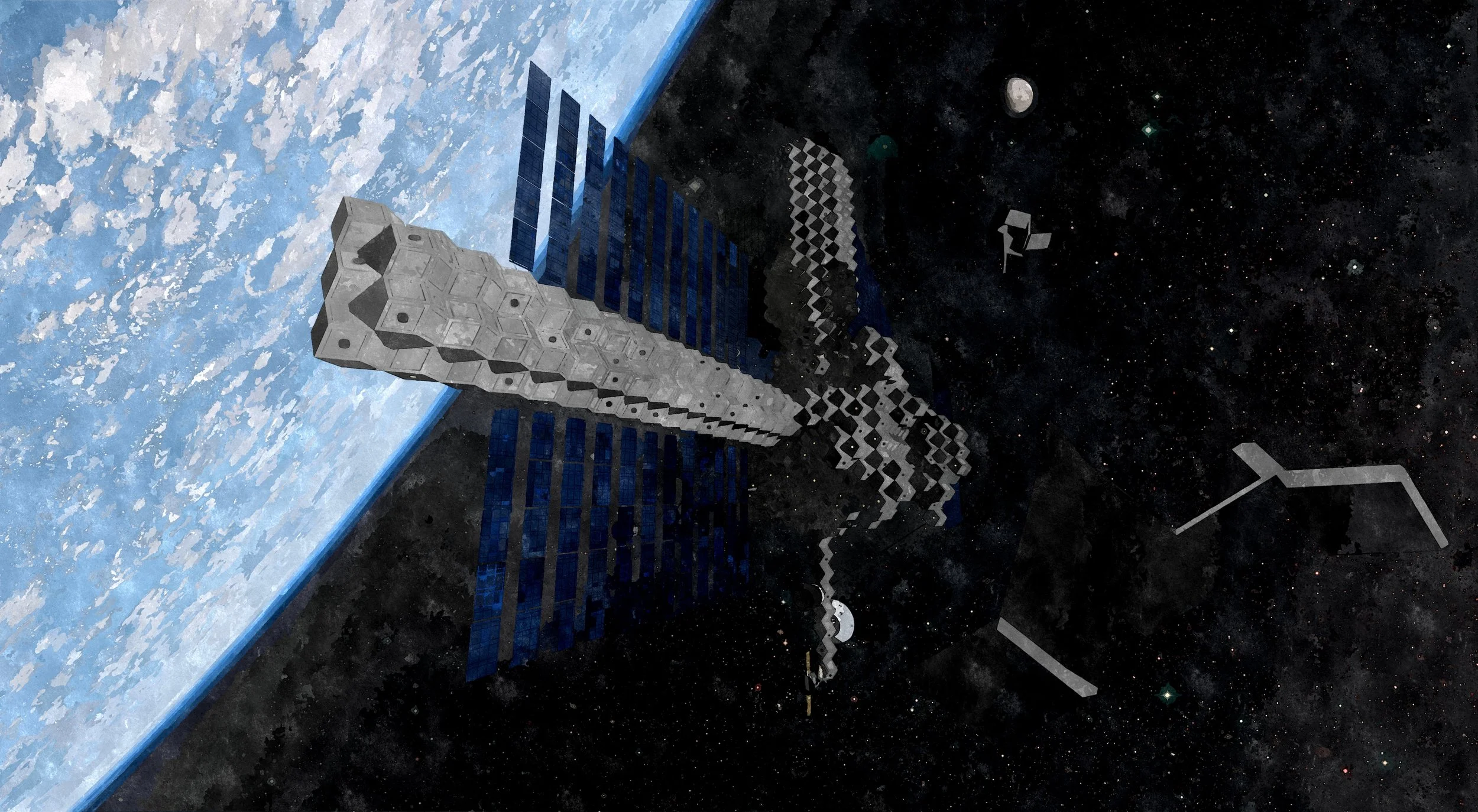
The Aurelia Institute has announced a new competition for space urbanism:
“As we approach the post-ISS era and start to plan in earnest for near and far futures where hundreds and even thousands of people visit, work, or live off-planet, it’s time to start designing for the practical realities of a spacefaring society[…]Aurelia Institute is excited to invite submissions from anyone with a thoughtful vision for what that future will look like.” - Ariel Ekblaw, Aurelia Institute
This competition is inspired by the 1975 NASA Summer Study, which has produced some of the greatest and most impactful conceptual artwork of its kind. I myself have found much inspiration in the work of the Summer Study and I’ve always found it so incredibly fascinating how concepts of such fantastic scale were considered important enough to take seriously.
The Aurelia Institute Prize competition will be judged by a panel of space architects, designers, and even a NASA astronaut. Entrants are asked to provide up to five images and up to 300 words to provide a vision of what they think a next generation space station could be. The judging criteria are as follows.
Creativity
Well-considered
Viability
Presentation
Purpose
It is my opinion that my Project F12 has the capacity to meet the needs of a next generation space station. It is fitting that the prize is focused around space urbanism, in that urbanism carries the implication of a community of projects, investments, and initiatives, each of which benefit from being integrated into a whole that is much greater than the sum of its parts. I have partnered up with my colleague James Boullion to create a prospective space station concept using Project F12 as a fundamental building block. We use the crystal as a metaphor for how the station grows over time, and as such, we have titled our submission “Garnet”.
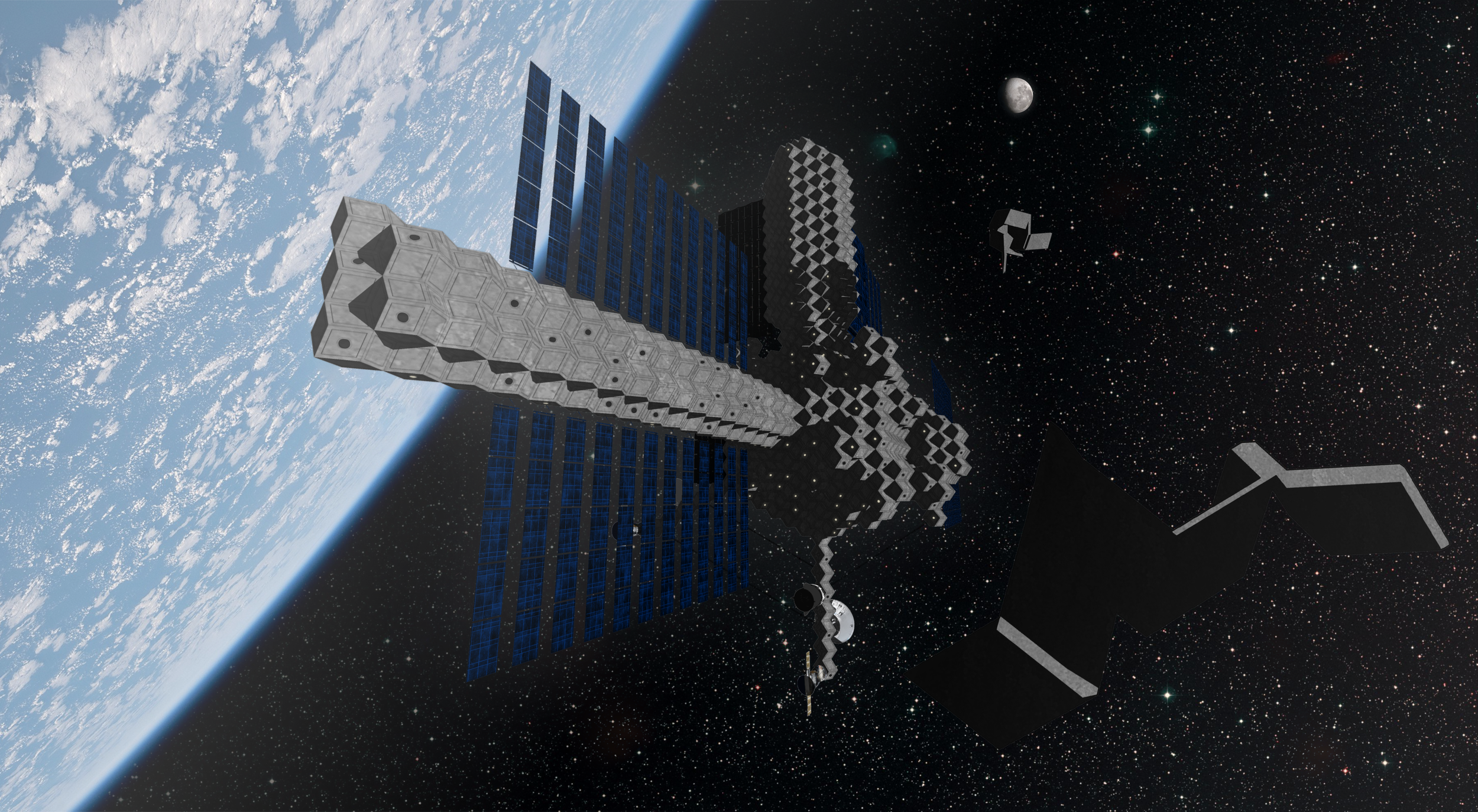
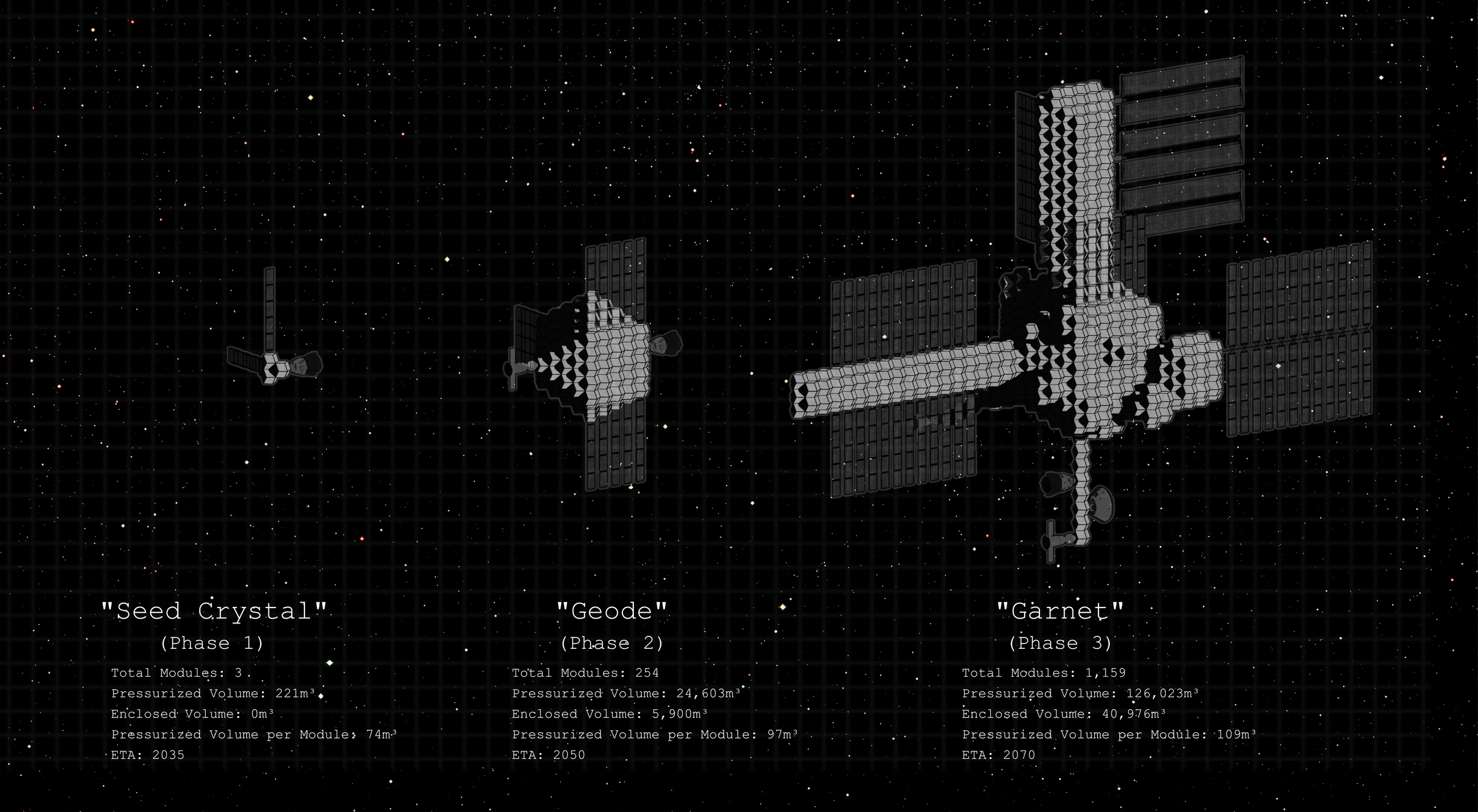
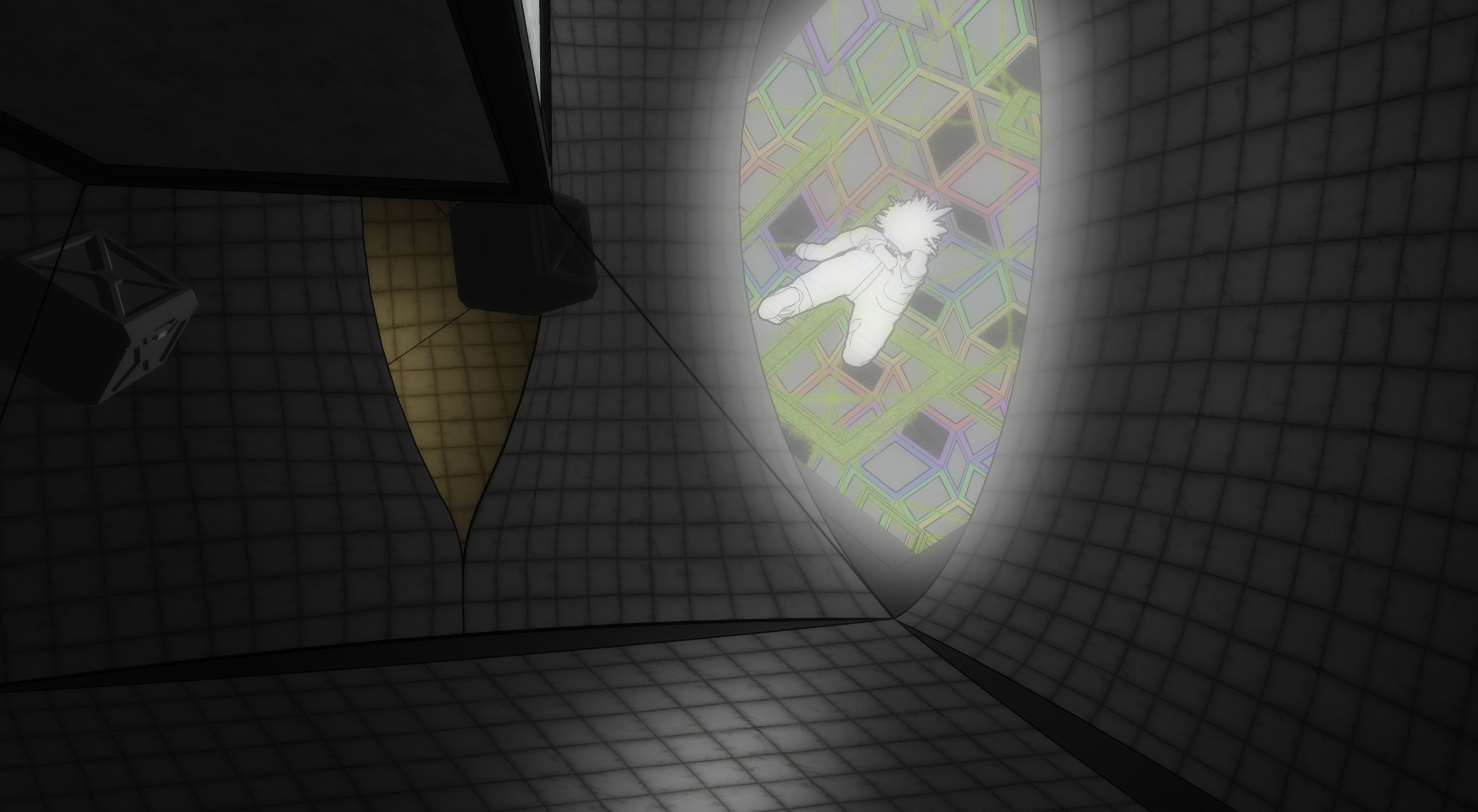
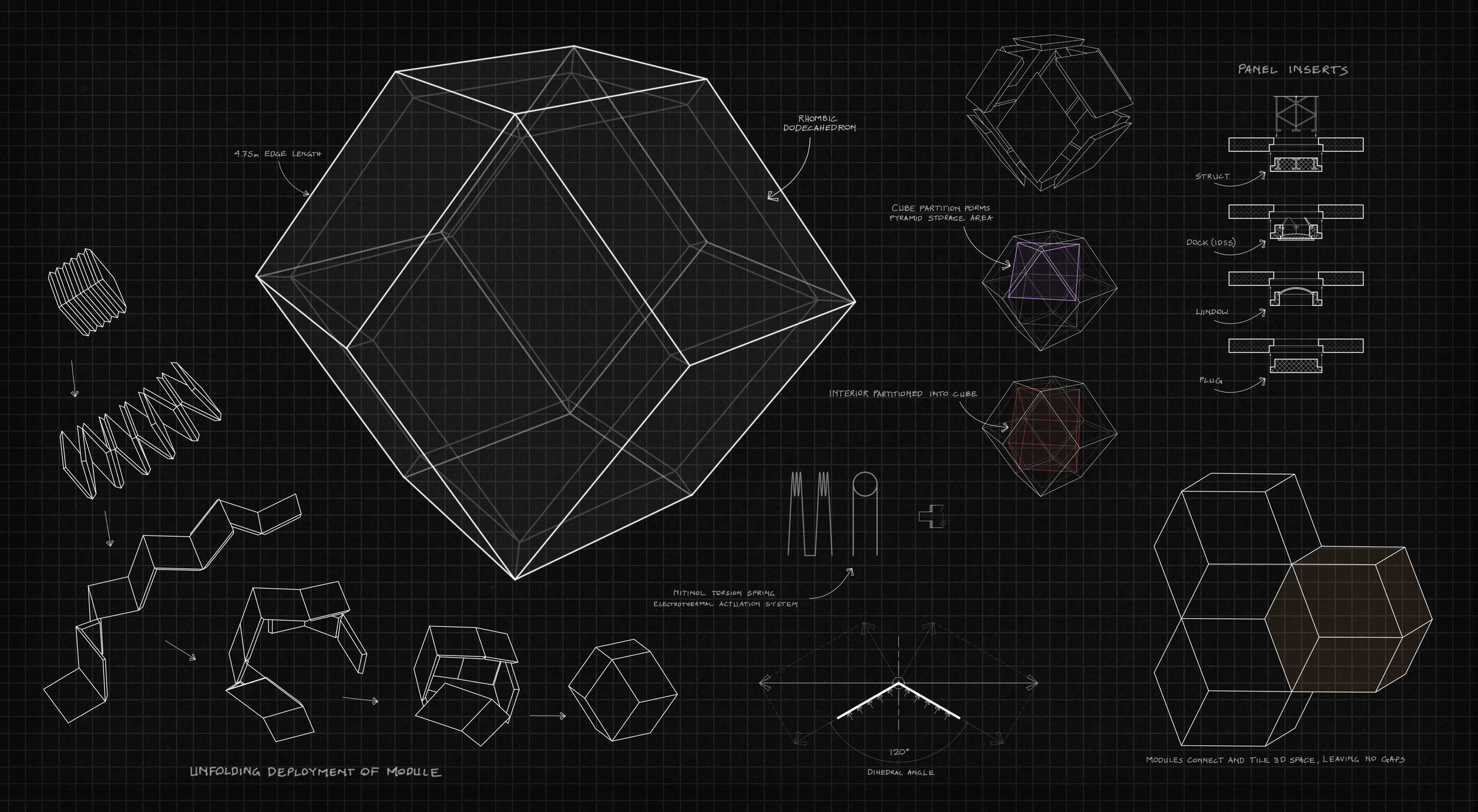
"Garnet" is a vision what space urbanism could offer and how it could be accomplished. It is not a specific endpoint, but rather a framework for how to get there that is simultaneously light years ahead and down to Earth.
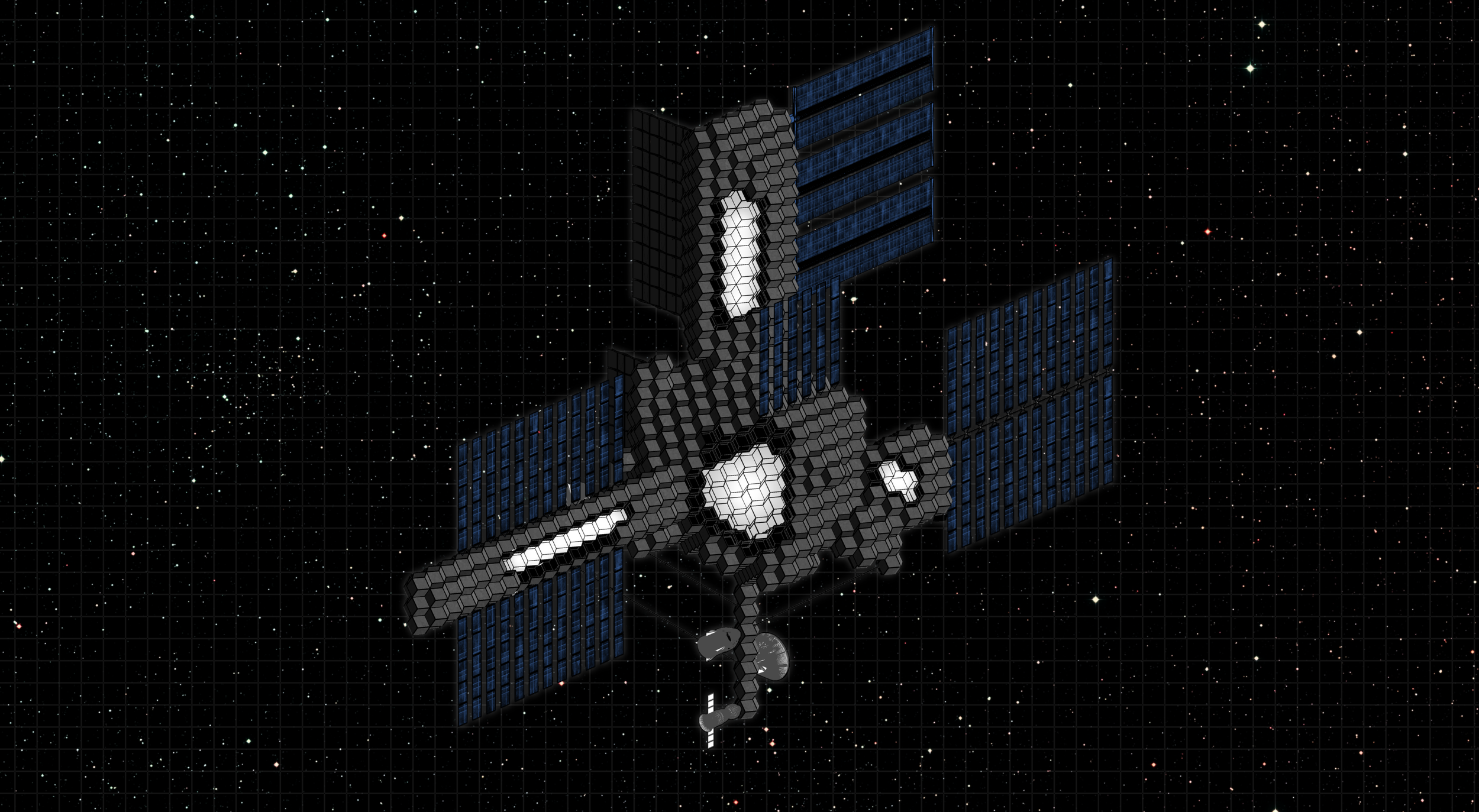
The fundamental building block of "Garnet" is the rhombic dodecahedron module. This shape is exceptional in many ways, chief among them is its ability to tile three-dimensional space without leaving any gaps. This ability is key to the value proposition of "Garnet", in that the modules can enclose a volume of space, which can be used in addition to the volume enclosed by each individual module. In this way, as more modules crystallize into the structure, the pressurized volume per module increases over time.
While a large-scale space habitat on the order proposed during the 1975 Summer Study would be an incredible achievement, the cost and construction time of such a structure is not practical for any private or public group of entities to undertake (especially so if it is not functional for the 50+ years of construction and funding required). Instead, "Garnet" represents a framework for the gradual construction of large-scale habitats that can organically grow from a seed crystal to a megastructure in the spirit of space urbanism, while being occupiable at every stage. We recognize that, in contrast to planned cities for example, cities that grow naturally based on the needs of their occupants create a built environment that is intentional, functional, and loved.
"Garnet" is a space city. The hollow core stands as the social hub and ground plane, while research, manufacturing, and commerce extend from the core as buildings into the endless sky. The city of tomorrow is possible...with the right building blocks.